

The Ancient Science of Harmonious Living
Vaastu Shastra, an ancient Indian architectural science, is deeply rooted in the same spiritual traditions that gave birth to Ayurveda and Jyotish Shastra (Vedic Astrology). For thousands of years, Vaastu has guided how homes, temples, and cities should be built to ensure peace, prosperity, and positive energy.
Even the excavations of Harappa and Mohenjo-Daro reveal that ancient Indian civilizations were masters of Vaastu principles — evident from their advanced planning, drainage systems, and perfect symmetry. Similarly, in the Mahabharata, Lord Krishna built Dwarka following Vaastu tenets, ensuring that his kingdom fulfilled its divine purpose and ultimately submerged into the ocean as destined.
Origin of Vaastu Purusha – The Divine Energy Grid

According to Brihat Samhita, the sacred astrological encyclopedia, the story of Vaastu Purusha is both mystical and symbolic.
Once, during a fierce battle with demons, Lord Shiva perspired intensely, and from his sweat emerged a powerful being — Vaastu Purusha. Overcome with hunger, he began devouring everything in sight. To restore balance, the gods approached Lord Brahma, who subdued Vaastu Purusha by pressing him to the earth. The deities then occupied different parts of his body, restraining his movement.
Vaastu Purusha pleaded for mercy, and Lord Brahma granted him a boon — that he would reside beneath every dwelling and, when honored properly, would bless the inhabitants with health, wealth, and happiness. But if neglected or disrespected, he could bring obstacles and misfortune.
This story represents a profound truth: just as the soul resides within the human body, Vaastu Purusha resides within every structure. The balance of design, direction, and energy ensures his contentment, leading to a harmonious environment.
Understanding the Vaastu Purusha Mandala
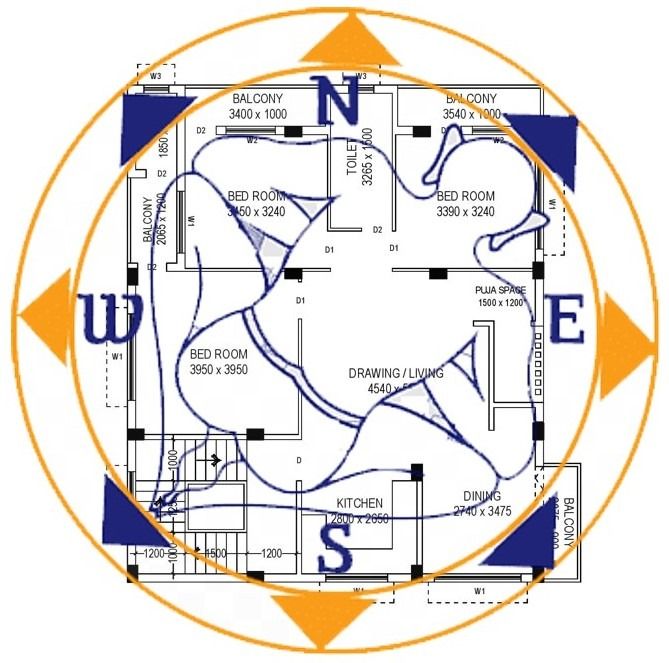
The Vaastu Purusha Mandala is a sacred geometric diagram representing the cosmic order on which every building should be planned.
In this diagram, Vaastu Purusha lies face-down, with his head toward the Northeast and feet toward the Southwest.
Each part of his body corresponds to a direction and a divine energy:
East & South (Right side) – Represent masculine energy: action, analysis, and power.
North (Left side) – Represents feminine energy: intuition, compassion, and calmness.
Northeast (Head) – The seat of spirituality and wisdom.
A perfect square plot is considered most auspicious as it ensures symmetry and balance.
If certain parts of Vaastu Purusha’s body are missing or obstructed, it can manifest as life problems:
Missing right arm – Financial losses and poor status of women in the house.
Missing left arm – Lack of food and monetary instability.
Missing head – Property disputes and instability.
Missing feet – Weak family leadership and health issues.
Hence, a home aligned with the Vaastu Purusha Mandala enhances prosperity, happiness, and fame.
Three States of Vaastu Purusha
The scriptures describe three dynamic conditions of Vaastu Purusha’s energy:
Nitya Vaastu – Vaastu Purusha changes his head’s direction every three hours.
Chara Vaastu – His head changes direction every three months with the seasons.
Sthira Vaastu – The most stable form, where his head always faces the Northeast.
A home designed keeping Sthira Vaastu in mind maintains continuous positive vibrations and emotional stability.
Vaastu and the Eight Directions
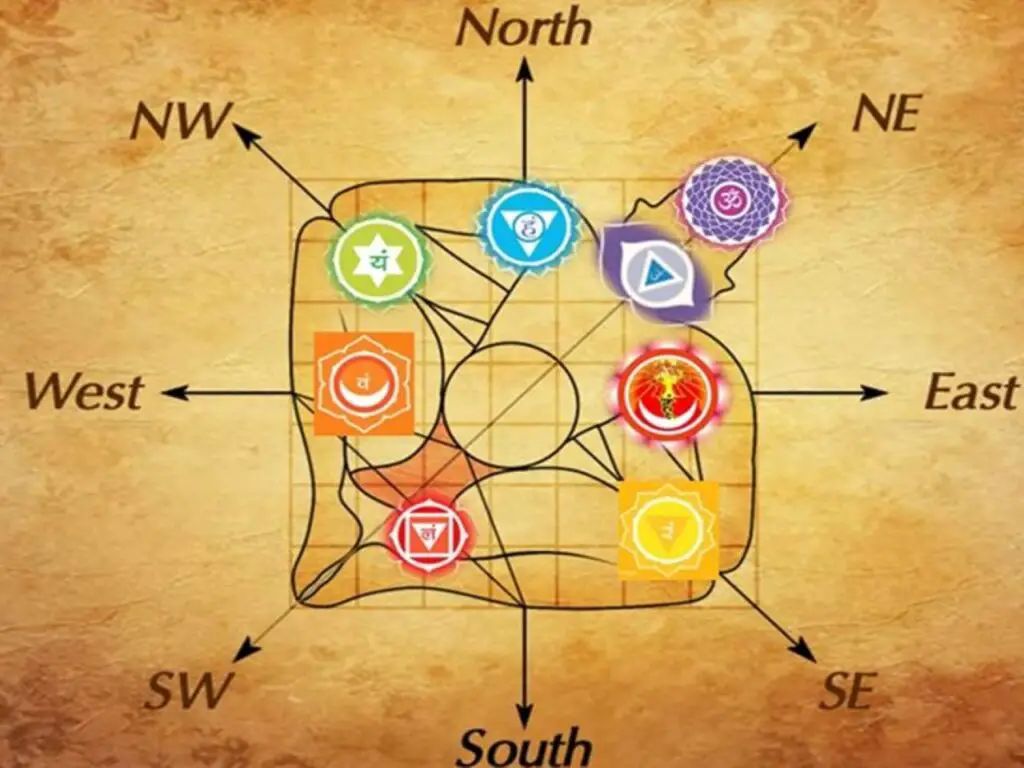
The eight cardinal directions in Vaastu Shastra are governed by specific deities and planets. Each direction influences a particular aspect of life. Correct utilization of these directions ensures cosmic harmony and success.
1. East Direction (Indra – Sun)
Symbolizes growth, prosperity, and vitality.
Best suited for entrances, balconies, and open spaces.
Keep this area clean, airy, and well-lit.
Avoid heavy walls, bathrooms, or storage in the east — these block solar energy and invite stagnation.
2. West Direction (Varuna – Saturn)
Represents stability, fame, and fulfillment.
Avoid keeping too many open spaces here.
Ideal for heavy furniture and storerooms.
Defects in the west can cause health issues and affect male members.
3. North Direction (Kubera – Mercury)
Known as the direction of wealth and career growth.
Keep it clutter-free and bright to attract financial prosperity.
Avoid toilets or heavy structures in this zone.
Misalignment can cause poverty and unstable finances.
4. South Direction (Yama – Mars)
Governs strength, discipline, and control.
Suitable for heavy structures or closed spaces.
Helps in maintaining privacy and protection from negativity.
A weak south can bring emotional imbalance or conflicts.
5. Southeast Direction (Agni – Venus)
Represents fire, energy, and health.
Ideal for kitchen, lamps, or fire elements.
Avoid placing water sources or mirrors here — they may cause health issues like digestive or kidney problems.
6. Southwest Direction (Niruti – Rahu)
Brings stability, authority, and fame.
Perfect for the master bedroom or heavy furniture.
Hanging paintings or placing Rahu Yantra can strengthen this corner.
Any defect here may lead to depression, anxiety, or loss of confidence.
7. Northeast Direction (Ishanya – Jupiter/Ketu)
The most sacred and auspicious direction.
Best for prayer rooms, meditation corners, or study areas.
Keep it clean, clutter-free, and filled with light.
A disturbed Northeast affects peace, immunity, and clarity of thought.
8. Northwest Direction (Vaayu – Moon)
Associated with movement, opportunities, and relationships.
Ideal for guest rooms or daughters’ rooms.
A properly balanced Northwest brings harmony, travel opportunities, and timely marriages.
Practical Vaastu Tips for Home and Well-Being
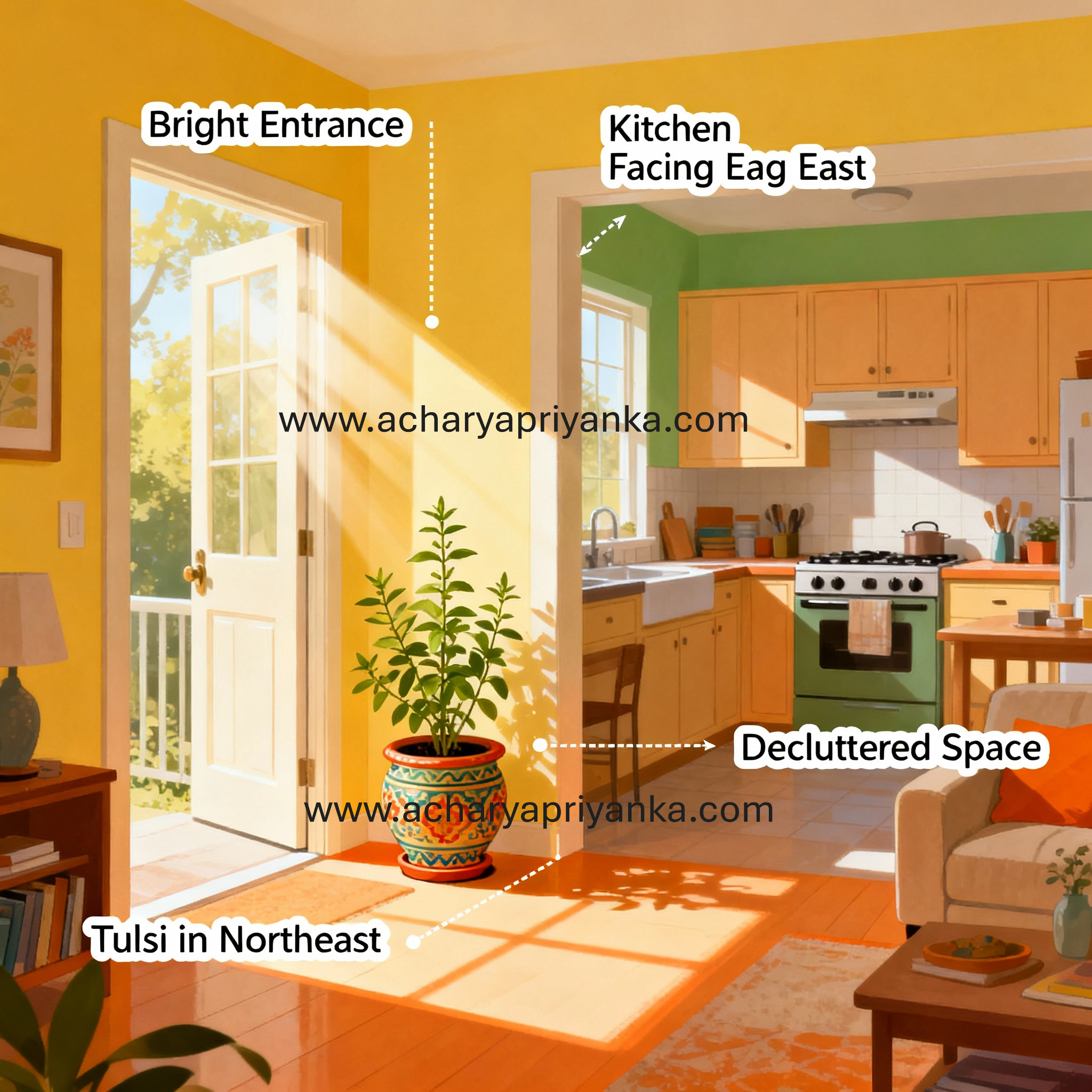
Keep the main entrance well-lit and positive.
Place a Tulsi plant or small water feature in the Northeast.
Avoid sleeping with your head towards the North.
Ensure your kitchen stove faces east and the cook faces east while cooking.
Keep mirrors away from the bed.
Declutter regularly to keep energy flow active.
Burn camphor or sage to purify space weekly.
Even small adjustments in Vaastu can bring significant improvements in mood, health, and prosperity.
Also check my Vaastu Tips for quick corrections.
Spiritual Significance of Vaastu Shastra
Beyond architecture, Vaastu is a spiritual discipline. It teaches that a home is not just a physical structure but a living entity infused with cosmic energies.
By aligning our living space with universal forces, we invite peace and abundance into our lives.
Each corner of the house becomes a temple of divine vibrations, supporting the spiritual evolution of its inhabitants.
Harmony Between Human Energy and Space
Vaastu Shastra harmonizes the microcosm (individual energy) with the macrocosm (universal energy).
When the body (home) and spirit (Vaastu Purusha) are aligned, health, happiness, and abundance flow naturally.
In modern times, even architects and interior designers are rediscovering the profound connection between space design and energy balance, integrating Vaastu principles into sustainable architecture.
Eternal Relevance of Vaastu in Modern Living
Vaastu Shastra remains timeless because it is based on the laws of nature, direction, and energy. Whether it’s a small apartment or a grand villa, applying Vaastu ensures that your home becomes a source of strength, success, and serenity.
Sacred Balance of Life and Space
Your home mirrors your inner state. When built and maintained according to Vaastu, it becomes a source of divine harmony — a space where energy flows freely, relationships thrive, and the soul feels at peace.
Embrace Vaastu not as superstition but as a science of sacred living — a bridge between cosmic intelligence and earthly existence.