

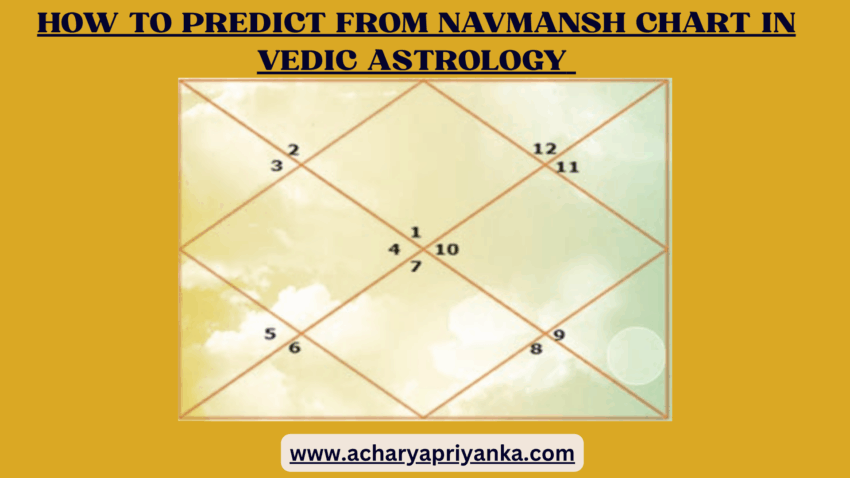
Navmansh – The Soul of the Horoscope and Key to Hidden Destiny
Navmansh is one of the most significant divisional charts in Vedic astrology. It is the ninth division of a sign and represents the soul of the horoscope, while the birth chart (Rashi chart) represents the body. If the body is lifeless without the soul, the Rashi chart is incomplete without the Navmansh chart. Therefore, no astrological analysis is considered complete unless the Navmansh has been carefully studied.
In simple words, the Rashi chart shows the outer events and personality, but the Navmansh chart reveals the inner strength, destiny, and the deeper purpose behind those events.
Significance of Navmansh in Vedic Astrology
According to Maharishi Parashara, Navmansh plays a divine role in understanding one’s karmic blueprint. While the birth chart shows the Sanchit Karma (the accumulated deeds from past births), Navmansh reflects the Prarabdha Karma — the portion of karma a soul has to experience in this lifetime.
That’s why two people born at the same time and place might share the same Rashi chart but still lead very different lives — the difference lies in their Navmansh placements.
Formation and Purpose of the Navmansh Chart
Every Rashi is divided into nine parts, and these divisions form the Navmansh chart — a subtle reflection of the soul’s journey. Ancient seers described this as a divine process that reveals the hidden strength and quality of each planet.
The Navmansh chart helps an astrologer understand the true potential of planets. Sometimes, a planet seems strong in the birth chart but does not give favorable results in life; its placement in Navmansh tells the deeper truth.
When a planet occupies a benefic sign or lies in the Kendra or Trikona houses, it becomes powerful and gives auspicious outcomes. But if it falls in the 6th, 8th, or 12th houses, it loses strength and creates obstacles.
Thus, the Navmansh acts like a spiritual X-ray of the horoscope — revealing the inner nature of planets and how destiny actually unfolds beyond what is seen in the Rashi chart.
Rashi Tulya Navmansh – The Mirror Technique
To predict from Navmansh, astrologers often use the method called Rashi Tulya Navmansh.
In this method:
The Navmansh Lagna is marked on the birth chart.
The planets are then placed in the signs they occupy in the Navmansh chart.
This newly formed chart is analyzed as a separate chart.
It helps reveal hidden aspects of planetary influence. A planet exalted in Navmansh is considered the best — even if it appears debilitated in the main chart. Conversely, if a planet is debilitated in Navmansh, it may give poor results even when exalted in the birth chart.
Vargottama Planets and Their Impact
A planet that occupies the same sign in both the Rashi and Navmansh charts is called Vargottama.
Such a planet gains special strength and offers good fortune, fame, wealth, and honor. However, if a Vargottama planet happens to be debilitated, it can bring achievements but also cause internal stress, health issues, or dissatisfaction.
How to Interpret Planets Through Navmansh
Each planet’s placement in Navmansh gives subtle clues about how its energy manifests in life:
Sun in Navmansh: Shows true soul purpose and inner leadership qualities.
Moon: Reveals emotional maturity and peace of mind.
Mars: Indicates hidden courage, energy, and motivation.
Mercury: Reflects intellect and adaptability in one’s karmic path.
Jupiter: Represents inner wisdom and divine protection.
Venus: Tells about relationship karma and aesthetic sense.
Saturn: Reflects endurance, discipline, and karmic debts.
Rahu & Ketu: Indicate spiritual transformation and past-life attachments.
A balanced Navmansh chart with planets well-placed in benefic houses (1st, 5th, 9th, or 10th) shows a life aligned with destiny, while afflicted Navmansh placements indicate struggles or lessons that the soul must overcome.
Navmansh and Marriage Predictions
Navmansh is also known as the “D-9 chart”, closely linked to marital happiness and dharmic path.
It shows not only the quality of one’s marriage but also spiritual maturity after marriage.
A strong 7th lord and benefic planets in Navmansh indicate a harmonious marriage.
Malefic planets or afflicted 7th house in Navmansh can cause delays or disharmony.
Venus and Jupiter in Navmansh are major indicators of marital blessings.
Therefore, for accurate marriage predictions, Navmansh is indispensable.
Spiritual Meaning of Navmansh
While most people focus on the predictive side, the deeper purpose of Navmansh is spiritual evolution.
It reveals what the soul truly came to experience — the journey from material attachment (Rashi) to divine realization (Navmansh).
Thus, an astrologer reading only the Rashi chart sees the surface; one who reads Navmansh understands the soul’s blueprint.
Conclusion
Navmansh is not just a supplementary chart — it is the soul map of a horoscope. It helps an astrologer understand how and when karmic promises of the birth chart will manifest.
A thorough reading of Navmansh refines predictions, deepens insight, and connects the astrologer with the divine rhythm of destiny.
Hence, while the Rashi chart shows what will happen, the Navmansh chart reveals why it happens — guiding us towards both material success and spiritual growth.