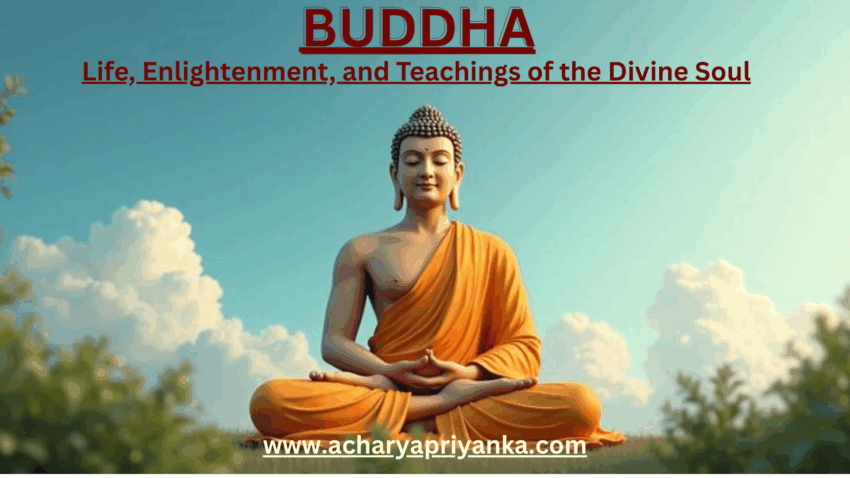
Around 2500 years ago, in the sacred land of Nepal, a divine child was born into the royal Shakya dynasty — Prince Siddhartha Gautama, who later became known as Buddha, meaning “The Enlightened or Awakened One.” His father, King Suddhodana, wished to protect him from every form of pain, sorrow, and suffering. Thus, Siddhartha was brought up in luxury and joy, shielded from the realities of life.
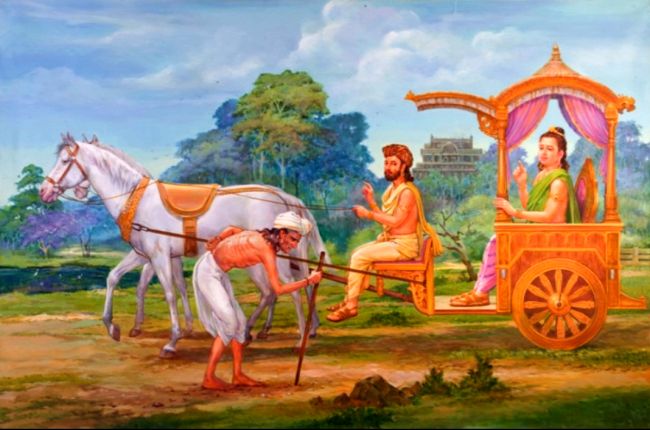
However, destiny had other plans. One day, while roaming outside his palace, Siddhartha witnessed the four sights — an old man, a sick person, a dead body, and a monk. These sights shook his soul deeply. He realized that no one could escape the truth of aging, sickness, suffering, and death. This marked the beginning of his spiritual awakening.
The Great Renunciation and Search for Truth
Disturbed by the realities of human life, Prince Siddhartha decided to seek the true meaning of existence. In the stillness of the night, he silently left his palace, wealth, and family to embark on a spiritual quest.
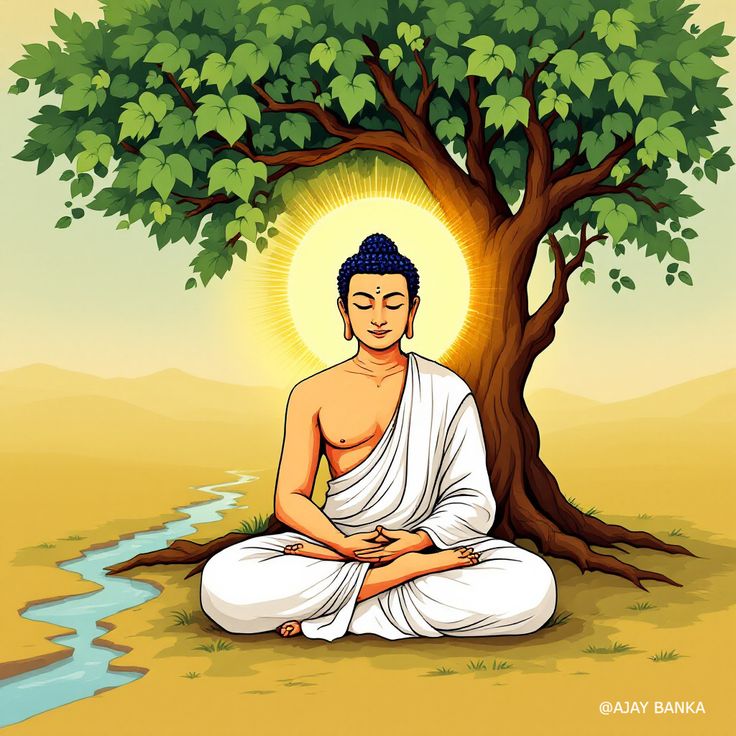
He spent years learning under various teachers and practicing deep meditation in forests. Yet, he felt incomplete — truth was still hidden. Determined to find the ultimate answer, he sat under a Bodhi tree in Bodh Gaya, vowing not to rise until he attained enlightenment.
After six days and nights of deep meditation, Siddhartha finally attained Enlightenment on a full moon night. He discovered the truth of human suffering and the path that leads to liberation. From that day, he became the Buddha — the “One Who is Awake.”
The Four Noble Truths
Buddha’s enlightenment revealed four profound truths, known as the Four Noble Truths:
Life is full of suffering (Dukkha).
Suffering arises from desires and attachments.
Freedom from suffering is possible.
The path to liberation is through the Noble Eightfold Path.
These truths became the foundation of Buddhism, guiding people toward peace, mindfulness, and wisdom.
Buddha’s Teachings and Journey
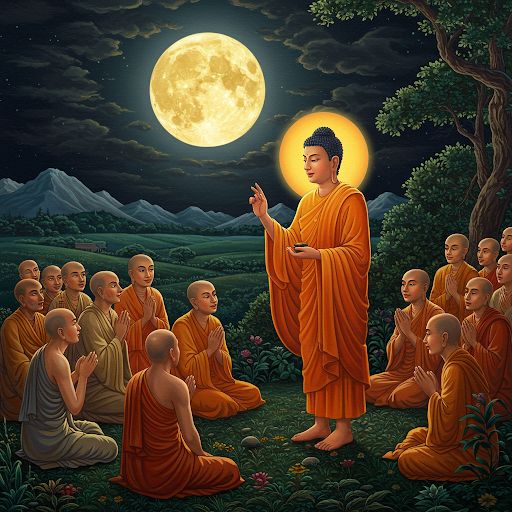
After his enlightenment, Buddha traveled across northern India, sharing his wisdom with everyone — from kings to commoners. For 45 years, he taught people about compassion, mindfulness, and the law of Karma.
His teachings emphasized that every individual must experience truth personally rather than blindly following. He encouraged his followers to question, explore, and realize through direct understanding.
Even today, Buddhism retains this approach — experience-based learning and self-realization.
Buddha and Meditation
Meditation was at the heart of Buddha’s journey. It was through meditation that he attained enlightenment and liberation from the cycle of rebirth.
Over centuries, meditation evolved into various Buddhist techniques such as:
Mindfulness Meditation (Vipassana): Observing one’s thoughts and breath to stay aware of the present moment.
Loving-Kindness Meditation (Metta): Cultivating compassion and love for all beings.
Visualization Meditation: Focusing on divine images or symbols to awaken inner peace.
Mantra Meditation: Repetition of sacred sounds or syllables for focus and purification.
In the Theravada tradition, meditators focus deeply on breathing to develop mindfulness, while in Tibetan Buddhism, chanting mantras helps one align with higher consciousness.
Regardless of the technique, the goal remains the same — to calm the mind, purify the heart, and awaken the soul.
Buddha and the Path to Nirvana
Buddha realized that desire is the root cause of human suffering. When we cling to material pleasures, relationships, or outcomes, we bind ourselves to the endless cycle of birth, death, and rebirth (Samsara).
But liberation — Nirvana — is achieved when one becomes free from desire, attachment, and ignorance. Nirvana is not a physical place but a state of ultimate peace and bliss, where the soul transcends suffering and becomes one with divine truth.
Buddha and Lama Fera
Lama Fera is one of the profound healing techniques inspired by Buddha’s divine energy. This sacred Buddhist practice involves the use of symbols, mantras, and healing vibrations to remove negative energies and karmic blocks.
There is a beautiful story behind the word “Dhai Fera” in this system:
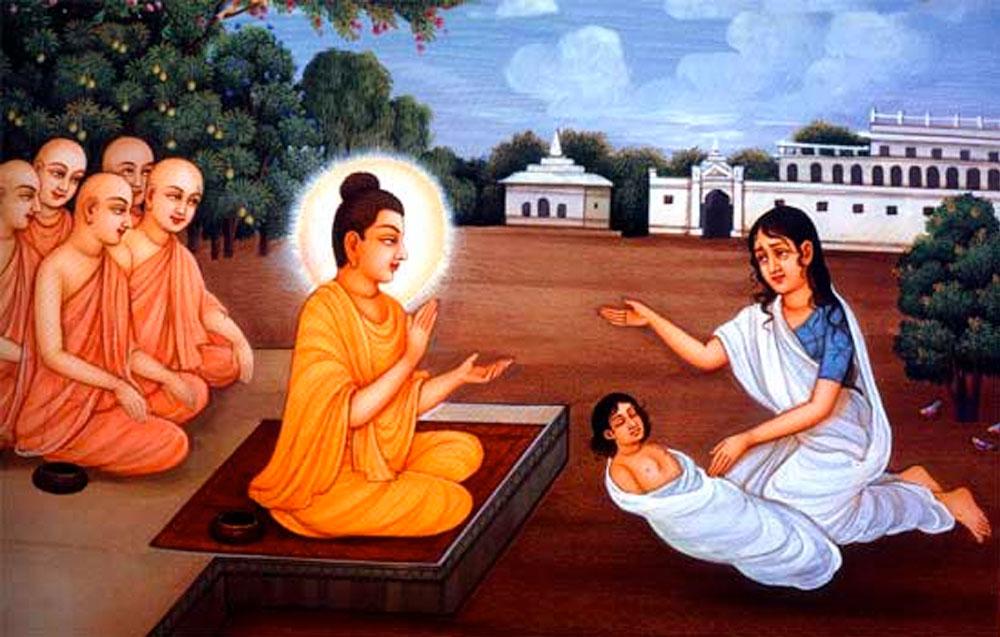
Once, when Buddha was surrounded by his followers, a grieving mother approached him, weeping for her only son who had passed away. She pleaded, “O Holy One, please bring my son back to life.”
Buddha gently told her to bring a mustard seed from any house where no one had ever died. The woman went door to door, but in every home, she found someone had lost a loved one. Realizing the truth of impermanence, she returned to Buddha with a peaceful heart.
Buddha then explained that death is inevitable — it is part of the eternal cycle. True peace lies not in denying death, but in understanding and accepting it.
He taught her the essence of Dhai Fera — letting go of sorrow and releasing negative karmas before helping others. Lama Fera thus symbolizes the end of suffering and the beginning of healing.
Buddha’s life is a timeless message of compassion, awareness, and liberation. His teachings continue to inspire millions across the world — guiding them toward mindfulness, peace, and self-realization.
From the royal palaces of Kapilavastu to the quiet forests of Bodh Gaya, his journey reflects the transformation from worldly pleasure to spiritual awakening.
Buddha reminds us that truth is not outside us — it lies within. When the mind is pure and desires are silent, the light of wisdom naturally shines.
The Spiritual Essence of Buddha’s Journey
Lord Buddha’s journey from a prince to an enlightened soul is not just a story — it’s a path of awakening for all of humanity. His teachings remind us that peace is possible when we understand life’s impermanence and embrace compassion over craving.
Through meditation, mindfulness, and self-awareness, we too can experience the divine silence where enlightenment begins — just as Buddha did under the Bodhi tree.