

Significance, 9 Forms of Durga, Puja Vidhi & Rituals
Navratri is one of the most celebrated and spiritually significant festivals of India. Dedicated to Maa Durga and her nine divine forms, these nine days symbolize the victory of good over evil, inner transformation, strength, purity and devotion.
Although four Navratris occur in a year, the most auspicious and widely celebrated ones are:
Chaitra Navratri (March–April)
Sharad/Navratri (September–October)
Both hold deep significance in Hindu culture as devotees observe fasting, perform daily rituals, visit temples and immerse themselves in spiritual practices to invoke the blessings of the Divine Mother.
In this article, you will find the mythology of Navratri, importance of each day, nine forms of Maa Durga, puja vidhi, benefits and traditional rituals—everything explained beautifully and in detail.
MYTHOLOGY BEHIND THE NAVRATRI FESTIVAL
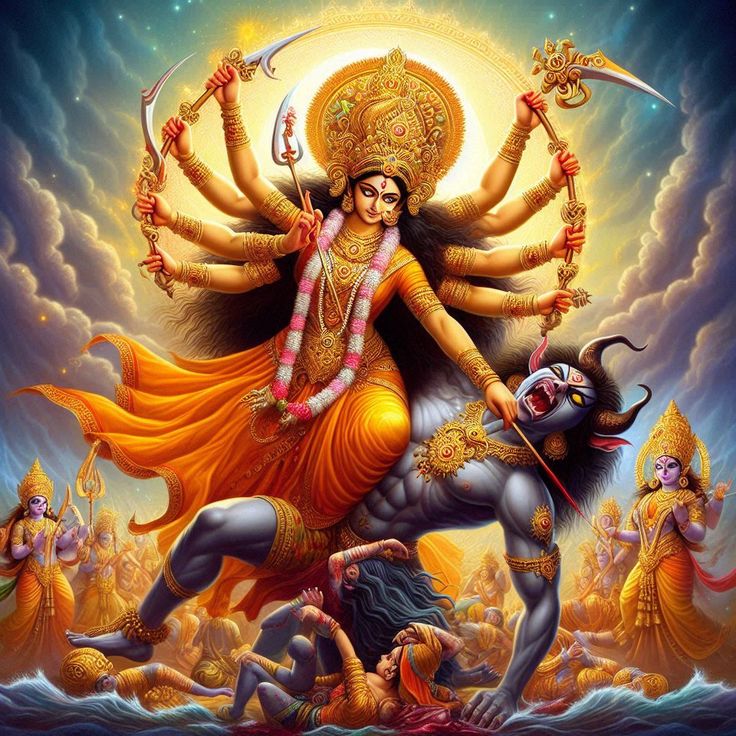
The story of Navratri comes from a powerful and divine battle between Maa Durga and the demon Mahishasura. According to ancient scriptures, Mahishasura was a shape-shifting demon who performed severe penance to impress Lord Brahma. Pleased with his devotion, Brahma granted him a boon that no man from any world could ever kill him. Empowered with this blessing, Mahishasura became arrogant and began to misuse his strength. He attacked Earth, troubled sages, spread fear across the universe, and ultimately captured Swarg Lok by defeating Indra and other deities. With no male power capable of stopping him, the gods approached Lord Brahma, Lord Vishnu, and Lord Shiva for help.
To restore balance, the Trinity released their divine energies. A brilliant, fiery light emerged, and all the gods contributed their powers into this radiance. From this celestial energy appeared Maa Durga (Maa Katyayani)—the ultimate embodiment of Shakti. She was resplendent, radiant, and fierce, created solely to end Mahishasura’s tyranny. Each deity blessed her with divine weapons:
Lord Shiva gave his trident
Lord Vishnu gifted the Sudarshan Chakra
Indra offered his Vajra
Other gods presented swords, bows, maces, and various divine powers
Armed with these celestial weapons and riding a lion, Maa Durga went to battle. Mahishasura kept changing shapes—from buffalo to lion to human—but the Goddess matched his strength at every step. This intense war continued for nine nights and ten days, symbolizing the gradual destruction of ego, darkness, and negativity. Finally, on the tenth day, Maa Durga pierced Mahishasura’s chest with her trident and ended his reign of terror.
This victory is celebrated as Navratri, representing the nine nights of divine power, and the tenth day is observed as Vijayadashami (Dussehra), marking the triumph of good over evil and light over darkness. The story teaches that whenever negativity grows beyond limits, the universe creates divine energy to restore peace, balance, and righteousness.
THE SPIRITUAL SIGNIFICANCE OF NAVRATRI
Navratri is not just a religious festival; it reflects self-discipline, purification and inner growth. The nine days represent:
- Cleansing of mind, body and soul.
- Awakening of the divine feminine energy (Shakti).
- Overcoming negativity and weaknesses.
- Attaining mental clarity and spiritual strength.
- Developing devotion, gratitude and humility.
Each day corresponds to one form of Maa Durga, symbolizing a step towards the highest form of consciousness.
DAYS OF NAVRATRI – NINE FORMS OF MAA DURGA & THEIR DEEPER SIGNIFICANCE
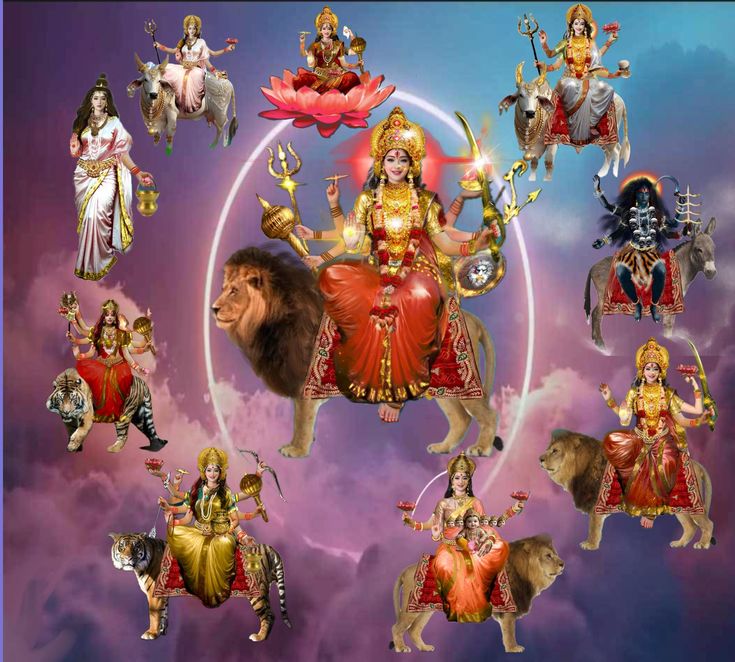
Every day of Navratri is dedicated to one powerful form of Maa Durga. Each form represents a different stage of spiritual evolution — from grounding and discipline to courage, purity and supreme consciousness. Worshipping these nine forms during Navratri helps devotees overcome inner weaknesses, attract divine blessings, and elevate their vibrations.
Below is a detailed explanation of all nine forms, their symbolism, benefits and mantras.
Day 1 – Maa Shailputri (शैलपुत्री)
Goddess of stability, purity and strong foundations
Maa Shailputri, the daughter of King Himavan, symbolizes the beginning of the spiritual journey. Riding a bull (Nandi) and holding a trident and lotus, she represents grounding, purity and determination. Her energy helps devotees remove confusion and begin their life or spiritual path with stability.
Symbolism:
Represents Earth element
Enhances emotional strength
Helps start new phases with clarity
Benefits:
- Happiness
- Stability in mind and relationships
- Prosperity and long-lasting success
Mantra:
शैलपुत्रीः ह्रीं शिवाय नम:।
Day 2 – Maa Brahmacharini (ब्रह्मचारिणी)
Goddess of devotion, penance and inner discipline
Maa Brahmacharini performed severe penance to attain Lord Shiva as her consort. She holds a kamandal and rosary, symbolizing Tapasya (austerity) and devotion. Worshipping her develops patience, focus and self-discipline.
Symbolism:
Represents Fire element
Awakens inner strength and willpower
Ideal for students and spiritual seekers
Benefits:
- Fame and positive recognition
- Strength and mental endurance
- Control over desires and emotions
Mantra:
ब्रह्मचारणी: ह्रीं श्रीं अम्बिकायै नम:।
Day 3 – Maa Chandraghanta (चन्द्रघण्टा)
Goddess of bravery, grace and protection
Maa Chandraghanta adorns her forehead with a crescent moon shaped like a bell (Ghanta). She is a fierce yet compassionate form who protects devotees from negative energies and fear.
Symbolism:
Represents the divine balance of serenity and power
Riding a tiger, she symbolizes fearlessness
Removes obstacles and provides divine shield
Benefits:
- Relief from mental stress
- Peaceful mind
- Protection from evil influences
Mantra:
चन्द्रघण्टा: ऐं श्रीं शक्तयै नम:।
Day 4 – Maa Kushmanda (कूष्माण्डा)
Creator of the cosmic universe and source of radiant energy
Maa Kushmanda is believed to have created the universe with her gentle smile. She resides in the core of the Sun, radiating infinite cosmic energy and vitality.
Symbolism:
Represents the Solar energy
Enhances creativity, brilliance and joy
Removes fear and revitalizes the body
Benefits:
- Success in tasks
- Sharp decision-making
- Good health and self-confidence
Mantra:
कूष्मांडाः ऐं ह्रीं देव्यै नम:।
Day 5 – Maa Skandmata (स्कंदमाता)
Mother of Kartikeya and goddess of motherly compassion
Seated on a lotus and carrying baby Skanda (Kartikeya) on her lap, Maa Skandmata showers immense motherly love and blessings. She symbolizes compassion, nourishment and spiritual evolution.
Symbolism:
Represents the space/ether element
Grants knowledge, purity and blessings
Opens the doors to abundance
Benefits:
- Desire fulfillment
- Growth in career and life
- Overall spiritual upliftment
Mantra:
स्कंदमाताः ह्रीं क्लीं स्वमिन्यै नम:।
Day 6 – Maa Katyayani (कात्यायनी)
Warrior goddess who removes obstacles, especially in marriage
Born to Sage Katyayan’s penance, Maa Katyayani is a fierce form who destroys arrogance, delays and negativity. She is known as the goddess who blesses marriage, especially timely and suitable matches for girls.
Symbolism:
Associated with empowerment and justice
Ideal form for seeking removal of life obstacles
Grants courage and victory in tough situations
Benefits:
- Blessings for marriage
- Protection from evil and negativity
- Strength to fight challenges
Mantra:
कात्यायनी: क्लीं श्रीं त्रिनेत्रायै नम:।
Day 7 – Maa Kaalratri (कालरात्रि)
The fierce protector who destroys darkness and fear
Maa Kaalratri is the most ferocious and powerful form of Durga. Despite her fierce appearance, she blesses her devotees with courage and removes karmic negativity, black magic and hidden fears.
Symbolism:
Represents the night of transformation
Destroys ignorance and impurities
Grants inner freedom and liberation
Benefits:
- Protection from negative energies
- Fearlessness and confidence
- Removal of obstacles and hidden enemies
Mantra:
कालरात्रिः क्लीं ऐं श्रीं कालिकायै नम:।
Day 8 – Maa Mahagauri (महागौरी)
Goddess of purity, beauty and divine grace
After intense penance, Maa Parvati regained her radiant white complexion and became Mahagauri. She symbolizes purity, compassion, peace and refinement. Her grace brings harmony into the family and removes past sins.
Symbolism:
Represents calmness and divine glow
Brings emotional healing
Ideal for women seeking happiness and harmony
Benefits:
- Good luck and blessings
- Happiness in relationships
- Radiance on the face and aura
Mantra:
महागौरीः श्रीं क्लीं ह्रीं वरदायै नम:।
Day 9 – Maa Siddhidatri (सिद्धिदात्री)
The supreme goddess of siddhis, miracles and spiritual fulfillment
Maa Siddhidatri sits on a lotus and blesses devotees with 8 types of Siddhis and countless mystical powers. She is the form where the spiritual journey reaches completion — the stage of divine wisdom and enlightenment.
Symbolism:
Represents perfection, completion and supreme knowledge
Removes doubts and grants clarity
Ideal for seekers of spiritual mastery
Benefits:
- Fulfillment of desires
- Attainment of siddhi and success
- Higher consciousness and spiritual elevation
Mantra:
सिद्धिदात्रीः ह्रीं क्लीं ऐं सिदध्यै नम:।
NAVRATRI PUJA VIDHI
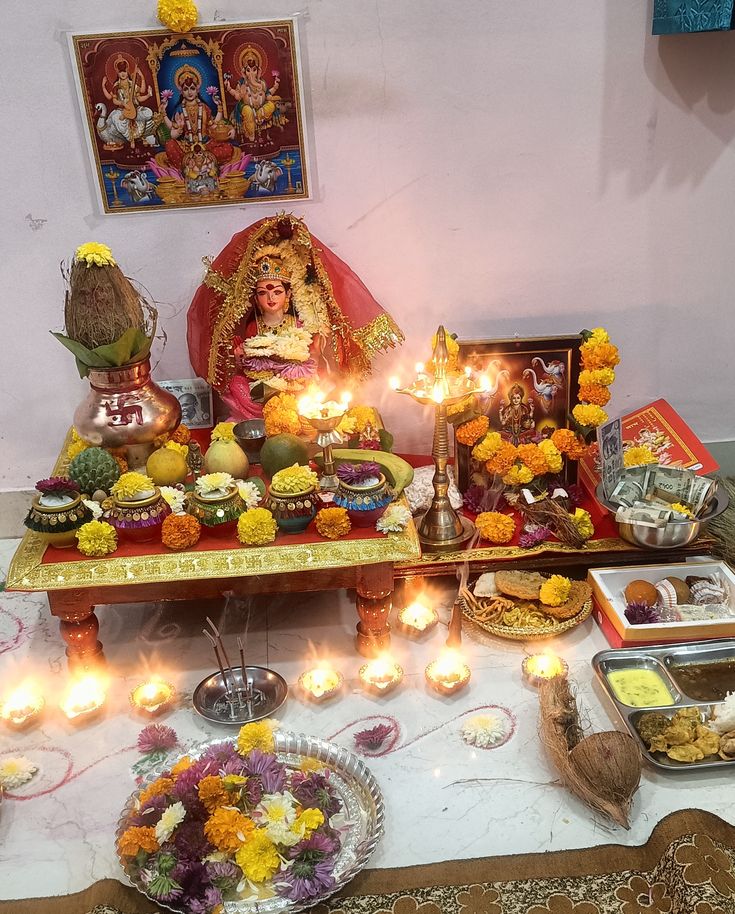
Performing Navratri puja with purity, devotion and correct rituals brings blessings, prosperity and protection.
1. Early Morning Routine
Wake up before sunrise
Take bath and wear clean/bright clothes (preferably yellow, red, orange)
Clean the temple area and sprinkle Gangajal
2. Kalash Sthapana (Ghatasthapana)
This marks the beginning of Navratri.
You will need:
Earthen pot
Fresh coconut wrapped in red cloth
Mango leaves
Rice and turmeric
Gangajal
Red chunri
Flowers
Durga Saptashati book
Ghee diya, incense sticks, sweets
Steps:
Fill the kalash with Gangajal, a coin, rice and a little haldi
Place mango leaves at the mouth of the pot
Keep the coconut (wrapped in red cloth) on top
Place the kalash near Maa Durga’s idol or picture
Offer flowers, chunri and sweets
3. Daily Puja Rituals
Each day:
- Light a pure ghee diya
- Chant Durga mantras
- Offer flowers, kumkum, rice, fruits and sweets
- Read Durga Saptashati or Durga Chalisa
- Maintain fasting according to your capacity
4. Kanya Pujan (Ashtami/Navami)
On the eighth or ninth day, devotees worship nine little girls representing Nav Durga. They are offered:
Kalash water
Tilak
Food (puri, halwa, black chana)
Gifts or dakshina
This ritual removes obstacles and brings blessings for prosperity, protection and success.
THE 108 NAMES OF MAA DURGA
| No. | Hindi Name | Hinglish |
|---|---|---|
| 1 | सती | Sati |
| 2 | साध्वी | Sadhvi |
| 3 | भवप्रीता | Bhavaprita |
| 4 | भवानी | Bhavani |
| 5 | भवमोचनी | Bhavamochani |
| 6 | आर्या | Aarya |
| 7 | दुर्गा | Durga |
| 8 | जया | Jaya |
| 9 | आद्या | Aadya |
| 10 | त्रिनेत्रा | Trinetra |
| 11 | शूलधारिणी | Shooldharini |
| 12 | पिनाकधारिणी | Pinakadhaarini |
| 13 | चित्रा | Chitra |
| 14 | चंद्रघंटा | Chandraghanta |
| 15 | महातपा | Mahatapa |
| 16 | मन | Man |
| 17 | बुद्धि | Buddhi |
| 18 | अहंकारा | Ahankaara |
| 19 | चित्तरूपा | Chittaroopa |
| 20 | चिता | Chita |
| 21 | चिति | Chiti |
| 22 | सर्वमंत्रमयी | Sarvamantramayi |
| 23 | सत्ता | Satta |
| 24 | सत्यानंदस्वरुपिणी | Satyananda-swaroopini |
| 25 | अनंता | Anantaa |
| 26 | भाविनी | Bhavini |
| 27 | भव्या | Bhavya |
| 28 | अभव्या | Abhavya |
| 29 | सदागति | Sadaagati |
| 30 | शाम्भवी | Shaambhavi |
| 31 | देवमाता | Devamata |
| 32 | चिंता | Chintaa |
| 33 | रत्नप्रिया | Ratnapriya |
| 34 | सर्वविद्या | Sarvavidyaa |
| 35 | दक्षकन्या | Dakshakanya |
| 36 | दक्षयज्ञविनाशिनी | Dakshayajna-vinaashini |
| 37 | अपर्णा | Aparnaa |
| 38 | अनेकवर्णा | Anekavarnaa |
| 39 | पाटला | Paatalaa |
| 40 | पाटलावती | Paatalavati |
| 41 | पट्टाम्बरपरिधाना | Pattambar-paridhaana |
| 42 | कलमंजरीरंजिनी | Kalamanjari-ranjini |
| 43 | अमेयविक्रमा | Ameya Vikrama |
| 44 | क्रूरा | Kroora |
| 45 | सुंदरी | Sundari |
| 46 | सुरसुंदरी | Surasundari |
| 47 | वनदुर्गा | Vanadurga |
| 48 | मातंगी | Matangi |
| 49 | मतंगमुनिपूजिता | Matanga-muni-poojita |
| 50 | ब्राह्मी | Brahmi |
| 51 | माहेश्वरी | Maheshwari |
| 52 | ऐंद्री | Aindri |
| 53 | कौमारी | Kaumari |
| 54 | वैष्णवी | Vaishnavi |
| 55 | चामुंडा | Chamunda |
| 56 | वाराही | Varahi |
| 57 | लक्ष्मी | Lakshmi |
| 58 | पुरुषाकृति | Purushakriti |
| 59 | विमला | Vimalaa |
| 60 | उत्कर्षिनी | Utkarshini |
| 61 | ज्ञाना | Jnanaa |
| 62 | क्रिया | Kriyaa |
| 63 | नित्या | Nityaa |
| 64 | बुद्धिदा | Buddhidaa |
| 65 | बहुला | Bahulaa |
| 66 | बहुलप्रिया | Bahulapriyaa |
| 67 | सर्ववाहनवाहना | Sarvavahana-vaahanaa |
| 68 | निशुंभशुंभहननी | Nishumbha-shumbha-hanani |
| 69 | महिषासुरमर्दिनी | Mahishasura-mardini |
| 70 | मधुकैटभहंत्री | Madhu-kaitabha-hantri |
| 71 | चंडमुंडविनाशिनी | Chanda-munda-vinaashini |
| 72 | सर्वसुरविनाशा | Sarva-sura-vinaashaa |
| 73 | सर्वदानवघातिनी | Sarva-daanaava-ghaatini |
| 74 | सर्वशास्त्रमयी | Sarva-shastramayi |
| 75 | सत्या | Satyaa |
| 76 | सर्वास्त्रधारिणी | Sarva-astra-dharini |
| 77 | अनेकशस्त्रहस्ता | Anekashastra-hastaa |
| 78 | अनेकास्त्रधारिणी | Anekastra-dharini |
| 79 | कुमारी | Kumaari |
| 80 | एककन्या | Ekakanya |
| 81 | कैशोरी | Kaishori |
| 82 | युवती | Yuvati |
| 83 | यति | Yati |
| 84 | अप्रौढ़ा | Aparudha |
| 85 | प्रौढ़ा | Praudha |
| 86 | वृद्धमाता | Vriddhamaataa |
| 87 | बलप्रदा | Balapradaa |
| 88 | महोदरी | Mahodari |
| 89 | मुक्तकेशी | Muktakeshi |
| 90 | घोररूपा | Ghoraroopa |
| 91 | महाबला | Mahabalaa |
| 92 | अग्निज्वाला | Agnijwalaa |
| 93 | रौद्रमुखी | Raudramukhi |
| 94 | कालरात्रि | Kalaraatri |
| 95 | तपस्विनी | Tapasvini |
| 96 | नारायणी | Narayani |
| 97 | भद्रकाली | Bhadrakaali |
| 98 | विष्णुमाया | Vishnumaayaa |
| 99 | जलोदरी | Jalodari |
| 100 | शिवदूती | Shivaduti |
| 101 | कराली | Karaali |
| 102 | अनंता | Anantaa |
| 103 | परमेश्वरी | Parameshwari |
| 104 | कात्यायनी | Katyayani |
| 105 | सावित्री | Savitri |
| 106 | प्रत्यक्षा | Pratyaksha |
| 107 | ब्रह्मावादिनी | Brahmavaadini |
| 108 | परमेश्वरी | Parameshwari |
BENEFITS OF CELEBRATING NAVRATRI
Celebrating Navratri with devotion brings:
Mental peace & positivity
Removal of obstacles
Protection from negative energies
Success in career & business
Improved focus and spiritual growth
Strengthened family harmony
Blessings for marriage and childbirth
When the Nine Nights Illuminate Life
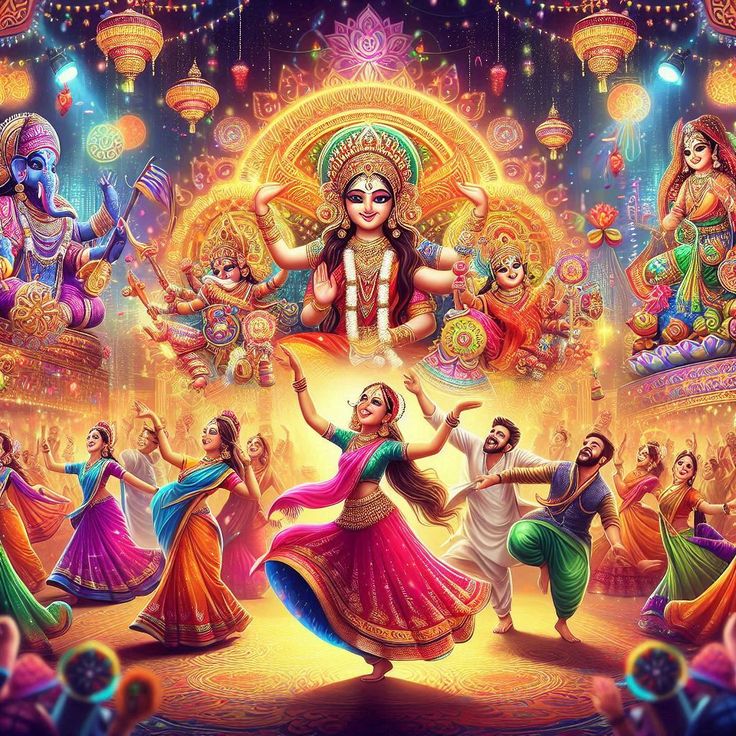
Navratri is not just a festival—it’s a spiritual journey of transformation, a time to invoke divine feminine power, defeat inner negativity and welcome harmony and prosperity into life. By worshipping the nine forms of Maa Durga, performing daily rituals with devotion and maintaining purity, one receives immense blessings of protection, peace, strength and success.
May Maa Durga bless you and your family with health, happiness and abundance during this sacred festival.
Also read: Mahamrityunjay Mantra – Meaning, Benefits and Powerful Effects.